Helping People and Other Lawyers
With Complex Legal Matters
Mar 22, 2024
Asbestos Finally Banned in United States
We’ve been waiting nearly 50 years to type this: Asbestos is finally banned in the United States. After decades of inadequate protections for workers, the EPA has finally banned the only remaining type of asbestos still imported into America. More than 50 countries have already banned the use of asbestos, which is known to cause […]
READ MOREJan 22, 2024
Gordon Rhea Wins USVI Bar Association’s Highest Honor
RPWB of counsel attorney Gordon Rhea was honored with the highest award during the Virgin Islands Bar Association’s annual meeting on December 8, 2023. The award ceremony highlighted Rhea’s dedication to the legal profession and his commitment, dedication and valuable contributions to the people of the Virgin Islands. The Winston A. Hodge Award for Public […]
READ MORENov 27, 2023
RPWB Represented a Whistleblower who Helped the Federal Government Recoup $1.7 million
ORLANDO, Fla. – The federal government has recouped $1.7 million from a healthcare provider who fraudulently billed Medicare and TRICARE for medical procedures that were not deemed necessary and were performed by an unqualified technician. In the settlement agreement, Jena Medical Group LLC, as well as several individuals associated with the company, have agreed to […]
READ MOREOct 17, 2023
Local Non-Profit to Receive $500,000 to Help Low Income Households Save Money on Power Bills
CHARLESTON, S.C. – A local energy conservation non-profit will receive nearly $500,000 to help low income residents in Berkeley, Georgetown and Horry counties conserve energy and save money on energy bills. The Sustainability Institute will receive $484,345.89 in unclaimed monies from the 2021 settlement of the class action lawsuit Hearn v. Santee Cooper. The case […]
READ MOREOct 02, 2023
RPWB Announces the Passing of J. David Butler
It is with great sorrow and heavy hearts that we announce the passing of our friend, colleague and law partner, J. David Butler on September 30, 2023, after a valiant three-year battle with cancer. He was a friend to all and was, quite simply, the nicest guy one could have the pleasure of knowing. Dave […]
READ MOREAug 21, 2023
17 RPWB Attorneys Selected for Best Lawyers in America List
MOUNT PLEASANT, S.C – Seventeen RPWB attorneys were selected for the 2024 edition of The Best Lawyers in America® list for numerous practice areas including personal injury, product liability, mass tort, class action, qui tam and medical malpractice litigation. This marks the seventh consecutive year in which RPWB is the top-listed plaintiff law firm in […]
READ MOREMay 01, 2023
Trial Lawyer Deon Tedder Joins RPWB
Trial attorney Deon Tedder has joined Rogers, Patrick, Westbrook & Brickman, LLC, where he will focus on personal injury, mass torts and criminal defense work out of the firm’s Mount Pleasant and Columbia offices. Tedder joins RPWB after working at David Aylor Law Offices for the past five years, where he helped many clients in […]
READ MOREFeb 03, 2023
Johnson & Johnson Talc Bankruptcy Petition Dismissal is a Win for Mesothelioma and Ovarian Cancer Victims
By Dave Butler In a significant victory for injured consumers, the Third Circuit Court of Appeals dismissed the bankruptcy petition of a Johnson & Johnson subsidiary that holds the company’s liabilities for claims brought by thousands of consumers injured by exposure to asbestos-contaminated talc in Johnson & Johnson products. The dismissal, on January 30, 2023, […]
READ MORENov 03, 2022
U.S. News & World Report: RPWB is a Top National Law Firm for Mass Torts & Class Actions
CHARLESTON, S.C. — RPWB is incredibly proud to be selected as one of the top national law firms for mass torts and class actions by U.S. News & World Report. RPWB is officially listed as a Tier 1 law firm for such cases, the highest possible designation. In addition to the national selection, RPWB also […]
READ MOREOct 12, 2022
How Do Camp Lejeune Lawsuits Actually Work?
You’ve no doubt seen the ads on television, but did you ever wonder how Camp Lejeune water contamination lawsuits actually work? Our team breaks it down for you. RPWB has filed its first administrative claims with the Navy JAG, the first step in the litigation process under the Camp Lejeune Justice Act. The JAG is tasked […]
READ MOREAug 18, 2022
With Sixteen Attorneys Named to Best Lawyers List, RPWB is the Top-Listed Product Liability and Class Action Law Firm in the State
Sixteen RPWB attorneys were selected for the 2023 edition of The Best Lawyers in America® list for numerous practice areas including personal injury, product liability, mass tort, class action and medical malpractice litigation. This marks the sixth consecutive year in which RPWB is the top-listed plaintiff law firm in South Carolina for both product liability […]
READ MOREAug 10, 2022
With a New Law, Camp Lejeune Water Contamination Victims Finally Have Legal Recourse
For more than 30 years, the drinking water at Marine Corps Base Camp Lejeune was contaminated with a cocktail of dangerous toxins linked to cancer, leukemia, Parkinson’s disease and other serious medical conditions. Now after intense lobbying by veteran’s groups and others, victims of Camp Lejeune’s contaminated water have legal recourse for compensation. On Wednesday, […]
READ MOREAug 03, 2022
Congress Passes Camp Lejeune Water Contamination Law
Over a 34-year period, many thousands of Marines and their families were exposed to dangerous water contamination at Marine Corps Base Camp Lejeune. After a long wait, justice may finally be in sight. Congress approved bi-partisan legislation on Tuesday night that will clear the way for veterans and their families to seek compensation in federal […]
READ MOREJul 05, 2022
Camp Lejeune Water Contamination Law Close to Passing, Would Finally Bring Justice to Veterans and their Families
A bill that is close to becoming law could finally provide justice and financial relief to veterans and their families for health problems caused by water contamination at Camp Lejeune in North Carolina. The bi-partisan Honoring our PACT Act of 2021 has passed both the U.S. Senate and the House of Representatives. It was sent […]
READ MOREJun 21, 2022
RPWB Helped Doctors Get Refunds for Non-Conforming Records Software
RPWB attorneys played a leading role in more than 5,000 doctors’ offices receiving refunds for being misled about their electronic medical record software qualifying for Medicare and Medicaid incentives. For years, Greenway Health sold software it claimed was certified under the federal government’s “Meaningful Use” program. That program includes financial incentives designed to reward physicians […]
READ MOREDedicated to Justice
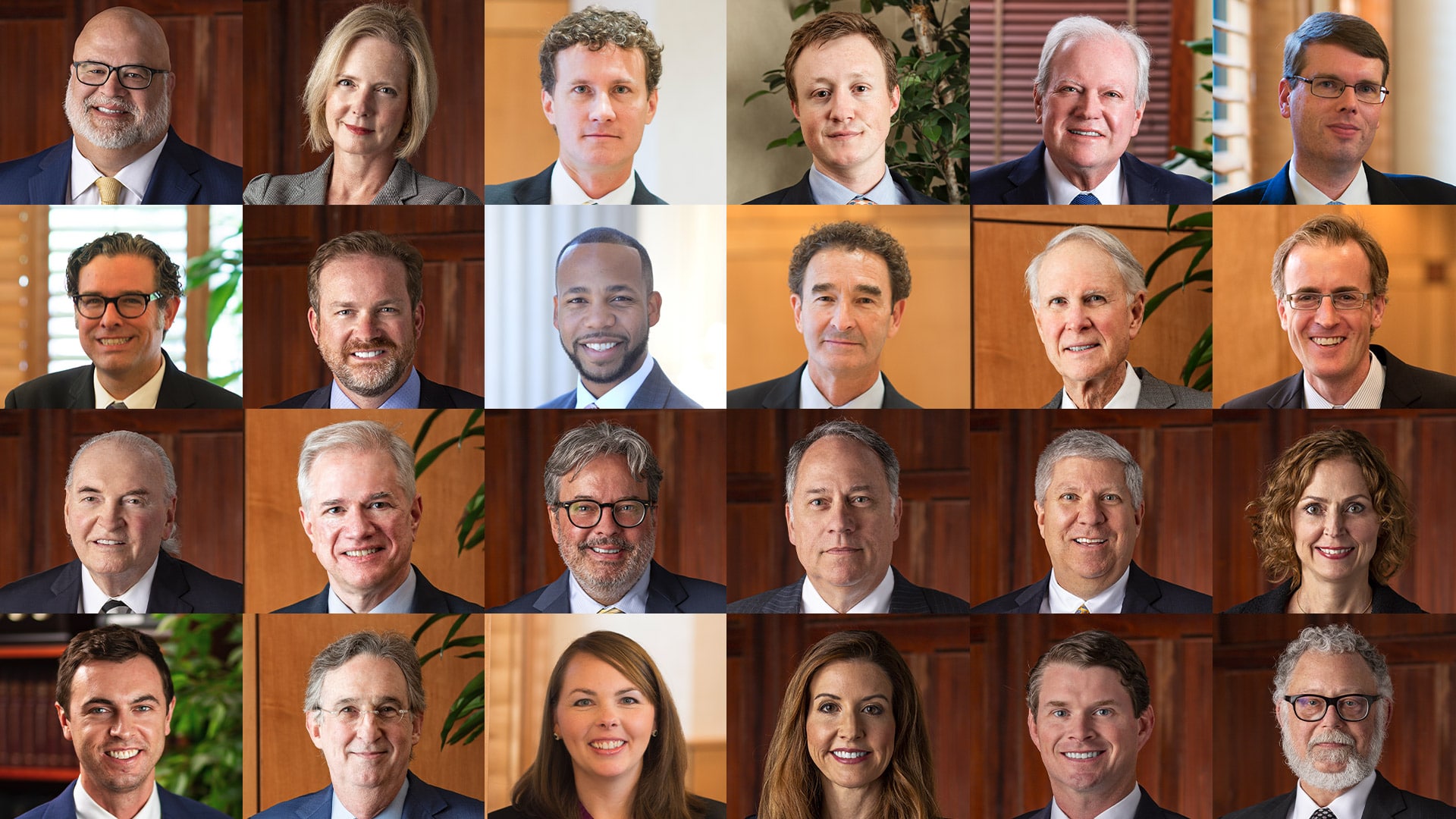
RPWB is a U.S. News & World Report Best Law Firm that helps people seek justice in complex legal matters, including product liability, personal injury, wrongful death, consumer class actions and medical malpractice cases. We stand squarely behind those who have been injured or are the victims of unscrupulous business practices as we take on the world’s largest and most powerful corporations.
Our experience spans decades, from the first successful asbestos trials in the 1970s to, more recently, our representation of veterans who were issued faulty 3M earplugs while in the military. RPWB lawyers are frequently named lead counsel in national lawsuits and hold leadership roles in many more. With RPWB, you are never just a number. You are a person who deserves and will receive the best possible representation in your pursuit of justice no matter who we are up against.
 Mesothelioma Lawsuits
 Mesothelioma Lawsuits
Since 1976, RPWB attorneys have helped thousands of people diagnosed with mesothelioma and other asbestos cancers in nearly every U.S state and territory. We take pride in providing hard-working Americans with aggressive representation and compassionate care. Our clients are not numbers to us. We relish the personal relationships we forge with asbestos victims and their families following a mesothelioma diagnosis.
READ MORE
Medical Malpractice
 Medical Malpractice
RPWB’s medical malpractice team has obtained impressive verdicts and settlements for people harmed by doctors and other medical providers. In fact, we are frequently enlisted by other attorneys to litigate complex cases in which patients did not receive the standard of care we all expect when seeking medical care.
READ MORE
Personal Injury & Wrongful Death
 Personal Injury & Wrongful Death
RPWB is uniquely qualified to seek justice on behalf of those killed or seriously injured due to defective products, unsafe premises or because of the negligence or malice of another person or company. We help families cover their immediate needs and build a foundation for the future.
READ MORE
Class Actions
 Class Actions
RPWB is ranked as a top-tier law firm for mass torts and class actions nationwide by U.S. News & World Report and is the top-listed class action law firm in South Carolina by Best Lawyers in America. We have decades of experience helping large groups of consumers who are financially hurt by deceptive and unlawful business practices.
READ MORE
Defective Medical Products
 Defective Medical Products
Our attorneys are recognized nationally for their work on behalf of people who are injured by defective medical devices. RPWB has the experience, reputation, skill and capacity for leading these large, complex cases against powerful corporations and the nation's top defense attorneys. We are currently accepting a variety of medical device cases.
READ MORE
Drug Injury Lawsuits
 Drug Injury Lawsuits
RPWB lawyers are frequently chosen to lead national lawsuits against the country’s biggest drug-makers. We believe patients and their doctors need to be adequately warned about dangerous side effects. See why RPWB is trusted by many thousands of people harmed by pharmaceutical drugs throughout the United States.
READ MORE
Start your free online case review
Call us at 1-888-293-6883. For a case review, use our contact form.
Serving people nationwide
Case Types
Awards





Start your free case review.
